Thursday, February 08, 2007

Sunday, February 04, 2007

The Children of War.


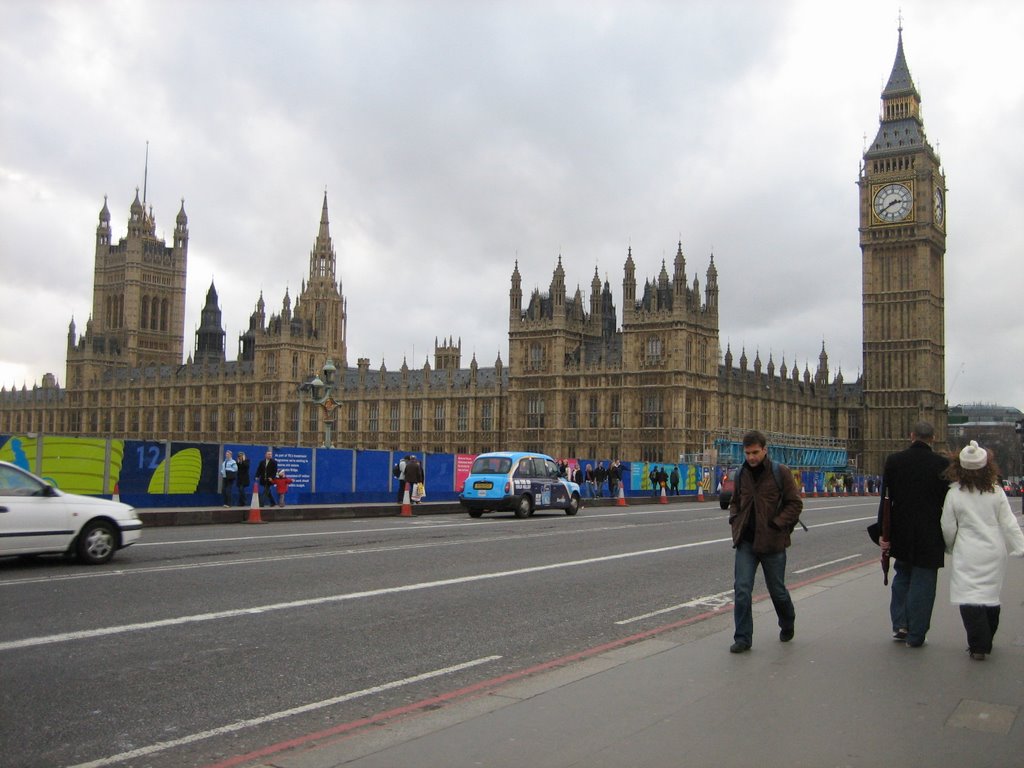
THE PLIGHT OF THE BRITISH PEOPLE during World War II is incredibly stirring, and difficult to fathom, particularly for Americans (for obvious geographical reasons). As I am getting to know the city intimately, I thought the time ripe for an exploration into the destruction of London by the Blitz bombings of World War II. A German bomber plane actually crash landed a mere block from my flat in 1941. It was believed that the plane was intended to bomb Buckingham Palace, but was clipped by a British defense pilot, and sent hurtling into a train station courtyard at some 350 miles per hour.

To know more, I commuted to the Imperial War Museum today. It is a bit off the beaten path of most tourists, and borders a working class neighborhood, complete with a make-shift soccer field nestled in the side gardens. The museum was a profoundly moving experience for me. Firstly, the majority of conversations around me indicated that not only was I surrounded almost exclusively by Britons (an odd museum experience in multicultural London, to say the least) but the people around me were swapping stories of their family's station during World War II. This woman's father was among the children evacuated from London, and sent to live in foster care in the country for four years...That young man's grandfather was killed on D-day and his letters are among his mother's possessions...My street in London was destroyed...Mine too...My grandparents lost everything they owned...My grandmother was a nurse, though only fourteen when the war broke out...My grandfather was a German POW for two years.
Strangely, while drifting from display case to display case, in and out of model bomb shelters, reels of film running in dark rooms and niches, I began to feel an incredible affinity for the people exchanging stories in my presence. My grandfather also served in the war, losing his left arm at the age of 21. The patriotic sentiment, the mixture of laughably silly propoganda posters and horrific black-and-white images, seemed familiar, not in a benign way, but in a unifying one. Truly, a world war.

Perhaps the strength of my response was due to the fact that I came to the museum alone, as a mission that was personal. Or, perhaps it was the particular exhibits I saw...focusing on the plight of British children during WWII, and the atrocities of the Holocaust. (My interest being in the human side of war, the innocence shattered, lost, the civilians, the casualties who did not opt into war...who were swept up by the carnage of an impasse between particular men. Though there is attention paid in the Museum also to the technical aspects of war, the ingenuity forced by desperation.) But I left the museum energized as well as drained, hopeful as well as sobered...and very, very grateful for such a powerfully moving experience.

Wednesday, January 24, 2007

A gripping installation piece at the British Museum...


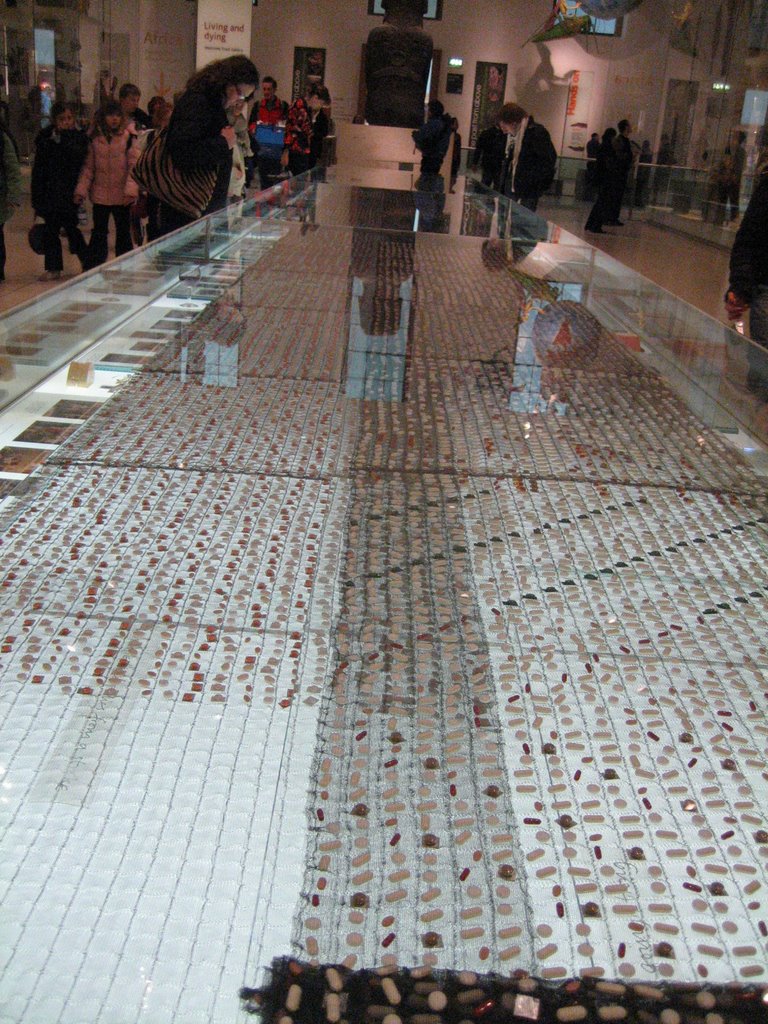
IT IS LATE AT NIGHT HERE, and I have an early class meeting in the morning, but I feel compelled to write a small blurb about the exhibition I saw at the British Museum yesterday, before its impression fades from me.
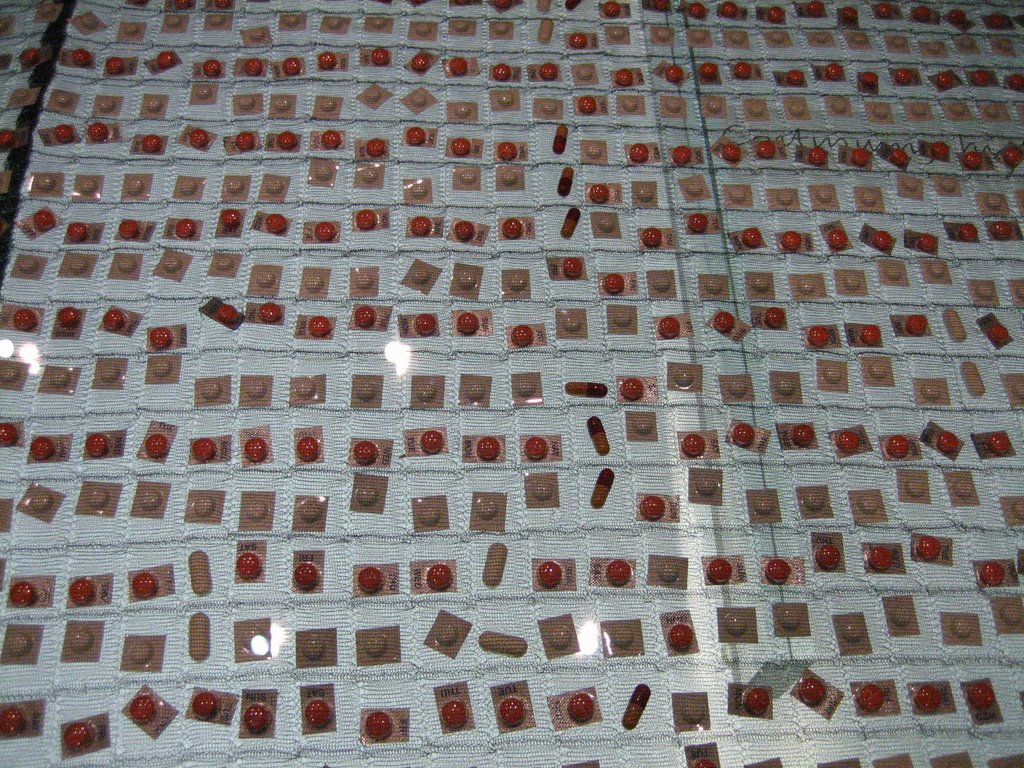
"Cradle to Grave" is the latest creation of the tripart that title themselves Pharmacopoeia. The work enters a modern artistic discourse, that of political commentary on the medical realities of our "modern" lives. This one focuses on the well-being of Brits, in particular...showing in netting some 14, 000 pills: the average consumed by a contemporary British citizen during their lifetime. The meticulous textile, drugs, other medical equipment, photographs of a very personalized treck toward death, and official birth and death certificates, combine in a startling, powerful, moving piece. Thought-provoking and imaginative...
Exactly what art should be.

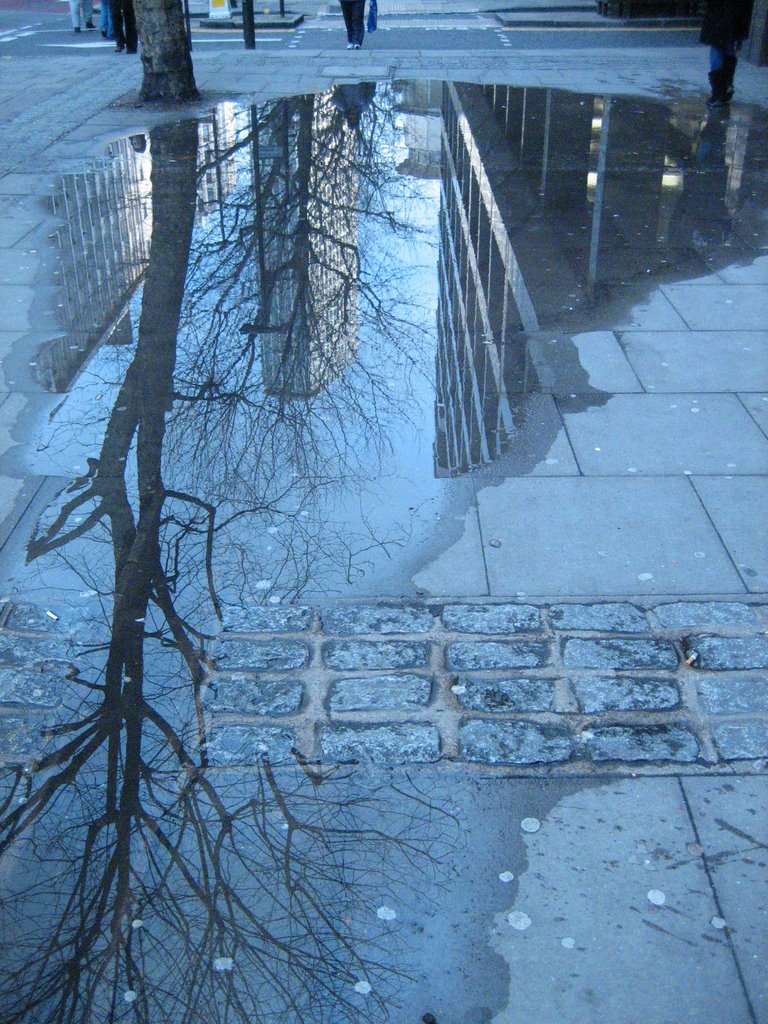
never been happier to see skies of blue...

glorious sunshine reflected in a puddle on Tottenham Court Road in London! This is so rare!

Monday, January 22, 2007

Don't they know that Plato hated poets?

I AM NOT accustomed to ranting on my blog. In fact, this may be entirely unprecedented. That being said, haven't the English heard--Plato (the bugger on the left picking an imaginary nose in this image) HATED POETS! He thought they spun beautiful lies...they were dangerous. In fact, all writing was dangerous. It risked that the undereducated silver or bronze classes of "commoners" might acquire the ability to read (unlikely in itself) and misinterpreting texts! Clearly, only philosophers should pass along knowledge...you know, through pedophilic masculine homosexual relations. No one else is fit to. Speech is masculine and virtuous. Written word is feminine, given to erroneousness or subjectivity...according to Plato. How icky. I think he just couldn't deal with the female body's ability to procreate physically...he was intimidated, afraid of the feminine!

This accounted for, what in the hell am I doing reading Plato in all of my ENGLISH LITERATURE classes? What about Descartes? Have the English forgotten that he is French? Duh...that's why we say "De-cart" instead of "Des-cart-es"...

For the life of the queen, they invented the Bard, not to mention the Beatles, or Lord Byron, Dickens, Bronte, Blake, Austen, Tolkien...and the list goes on for days.

That said, what is gained by a philosophical (albeit one restricted to WESTERN philosophy) approach to literature? Perhaps it is to remind ourselves that what we are looking for in the act of literary creation is not a pleasing aesthetic experience, in and of itself...but a stab at the virtuous, the truthful, the meaningful. To create meaning out of even the most mundane...it is what poets do, but also what lovers do. This madness, feverishness, anarchic creativity is only as such in a communicable order. Language is order. Reason, philosophy...they yield and create the stuff of mythology and poetry. This is not to say that great philosophical texts are to be used by students of literature as fodder for better writing, but rather that they can be engaged. They must be engaged.

This particular philosophy of teaching can be perceived as a liberal arts education (of which i am both a huge fan and a product) to the nth power. Knowledge is not compartmentalized in reality, the way it often is in school systems, for the sake of practicality or economics... Rather, Plato and his comrades had it right--to be a scholar, one must be inquisitive about everything. Be a poet, and also a mathematician, and also a theoretician, a chemist, a musician, a politician, a playwright...and you will be a scholar in the fullest sense.


...Plato was wrong about poets though.
Friday, January 19, 2007

Has anyone seen my ability to communicate?


CULTURE SHOCK-- a phrase tossed around repeatedly among the "study abroad" gurus of universities the world wide. I didn't believe in it. Perhaps, because its manifestations are not so obvious in this era. They are subtle and pervasive collapses in communicative abilities...taken in the broadest possible sense of the phrase. It is not as if one moves to a foreign country and always feels a sense of direct homesickness, of rushing highs and lows--complete awe and enthusiasm running into disillusionment, fear, and general irritability or defeatedness, and back again. Culture shock is described in these terms, and yet it is not "culture shock" at all...

I have been thinking about this issue for the last couple of weeks, since moving to London. For me, the manifestation of the misnomer "culture shock" has been in a frustrated inability to produce creatively. Or, so I thought.

In searching for a) the roots of my creative stagnation, and b) the remedy, i have embarked on a long train of thoughts of the metaphor of language. Granted, Londoners speak English. Americans speak English. So, language is no boundary? In a simple sense--no. I comprehend most words, most utterences. But the subtleties are unnerving. In overhearing a conversation...the patterns and intonations of the speech are undecodable to me. In making a public statement, I incorrectly used the word "pants" (british for underwear) where i should have used "trousers," and quickly became the laughing stock of a queue of Britons. It is in the element of what Saussure called "Parole" that is different. Quickly, "parole" is the element of language which is the individual utterances and applications of what Saussure deemed "Langue"...or the underlying structural rules, and social contract that activates and anchors a language.

Parole, however, is the creative element of language. And I have lost my mastery of it, over night. In a broader sense, the metaphor of language is a means of understanding and explaining other systems of human communication...social customs, body language, fashion, cuisine, visual art, and music. My cues in all of these areas have failed me. So, there you have it. "Culture shock" is actually a frustrated inability to communicate and to understand. It is as if I am suddenly a toddler who knows individual words are associated with certain objects, and yet I cannot form utterances...i cannot make myself understood. Nor can I interpret my surroundings, which is perhaps more frustrating.


Take the cue of fashion. For me, fashion is crucial to my interpretation of the persons with which I am surrounded. By fashion, I do not mean the runways of Paris...rather, the choices people make or dont make about the clothing that they wear, the length of their hair, the presence or absence of makeup, etc... Most especially, the ecosystem of the college campus lends itself to the interpretation and utilization of fashion as a means of communication. Clothing choices can be misleading, but they also often are made specifically to signify that the individual enjoys a certain kind of music, or has a certain occupation, or religious belief... I am much less able to comprehend the fashion cues of Londoners. My frame of reference is gone. Indeed, it seems as if everyone is utilizing a different frame of reference. The city is so large, that in many sublingual ways, the population communicates entirely differently...

This is an extremely underdeveloped train of thought, but I will post more on it later.

Thursday, January 11, 2007

Londonese writer's block...

What is that lust for life that a writer needs...? Is it something more prevalent in young people? I have been completely inundated with architectural beauty, foreign language, currency, surroundings, living space, and so much art, culture, food, fellowship...
And my writing? It has come to a screeching halt. I think it is the lack of schedule, the lack of homeostasis. How strange! Something so organic as the creative processes (my art, crafting, etc has stopped too...even photography has slowed!) needs structure to thrive! It needs a place...

Ay, London! I am ready for school to start!

Wednesday, January 10, 2007

Here is the Derek Jarman piece on AIDS...


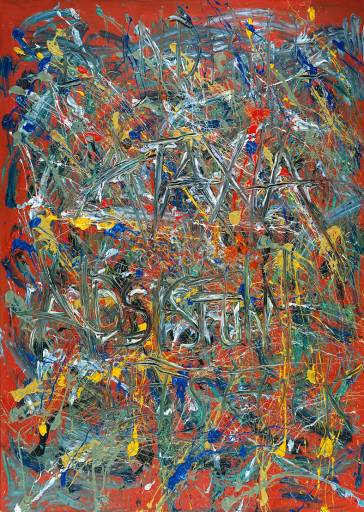
Here is the Derek Jarman piece on AIDS, "Ataxia: AIDS is fun" at the Tate.

Tate Modern is amazing!!!!


I went to the Tate Modern yesterday. All of the art is so incredible and overwhelming, plus it had a gorgeous view of the Thames. So, I really resonnated with a few pieces. There was one by an artist, whose name I forget, who died of AIDS in 1994. He created the piece after AIDS had attacked his nervous system and blinded him. It is a very thick multi-colored oil, in which he used his fingers to scrawl the words: "AIDS is fun" which is the title of the work. He was trying to counteract homophobia etc. attached to the disease. It was so powerful. I will find the artist's name and post it...
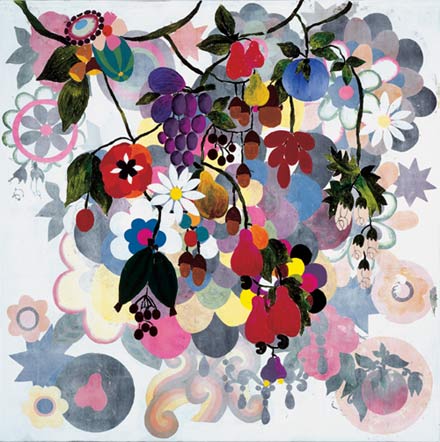
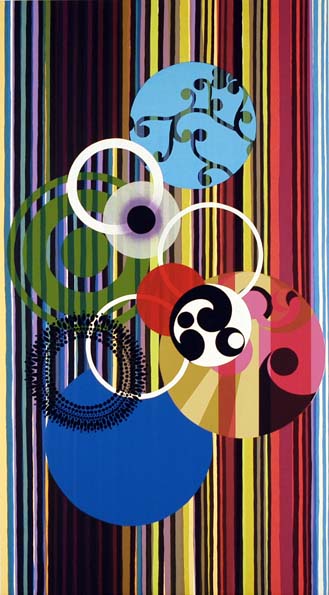
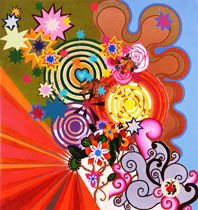
Also, I loved the work of Beatriz Milhazes. Here are some of her pieces.

Sunday, January 07, 2007

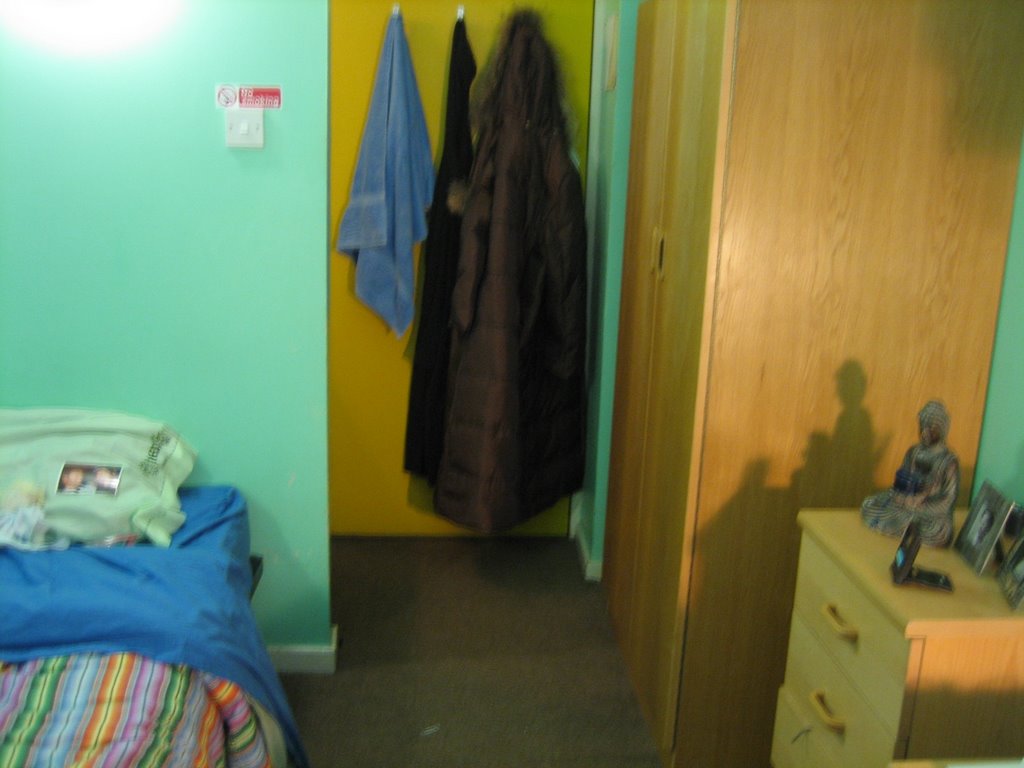
My humble abode in London, UK...


These are the images of my new room in London. I couldn't attach them to an email for some reason, so they are here instead. I will take them down again in a few days!

Friday, January 05, 2007

TEXTiles continued...


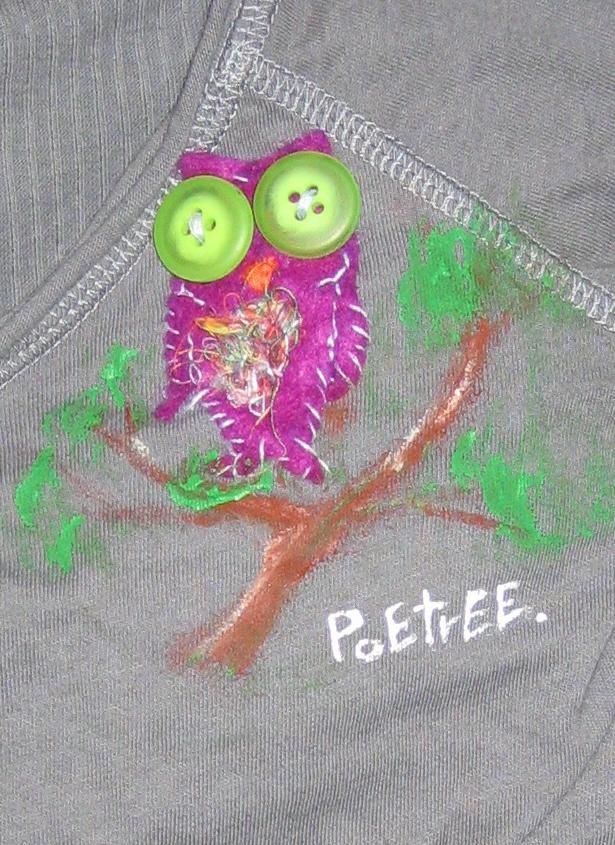
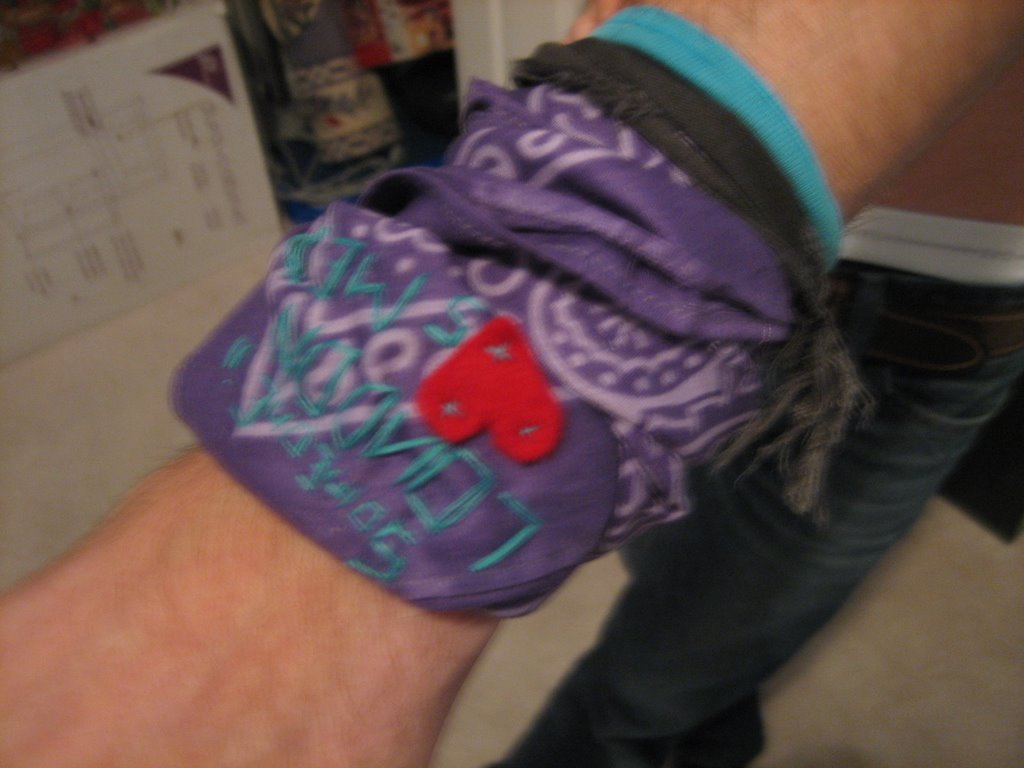
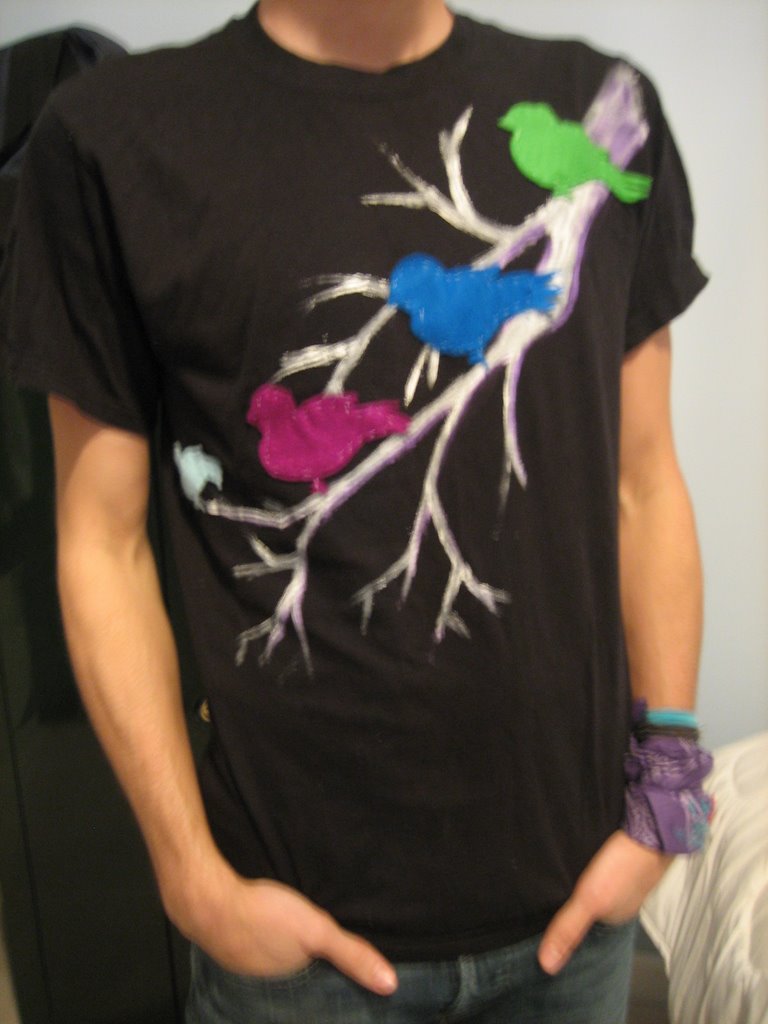
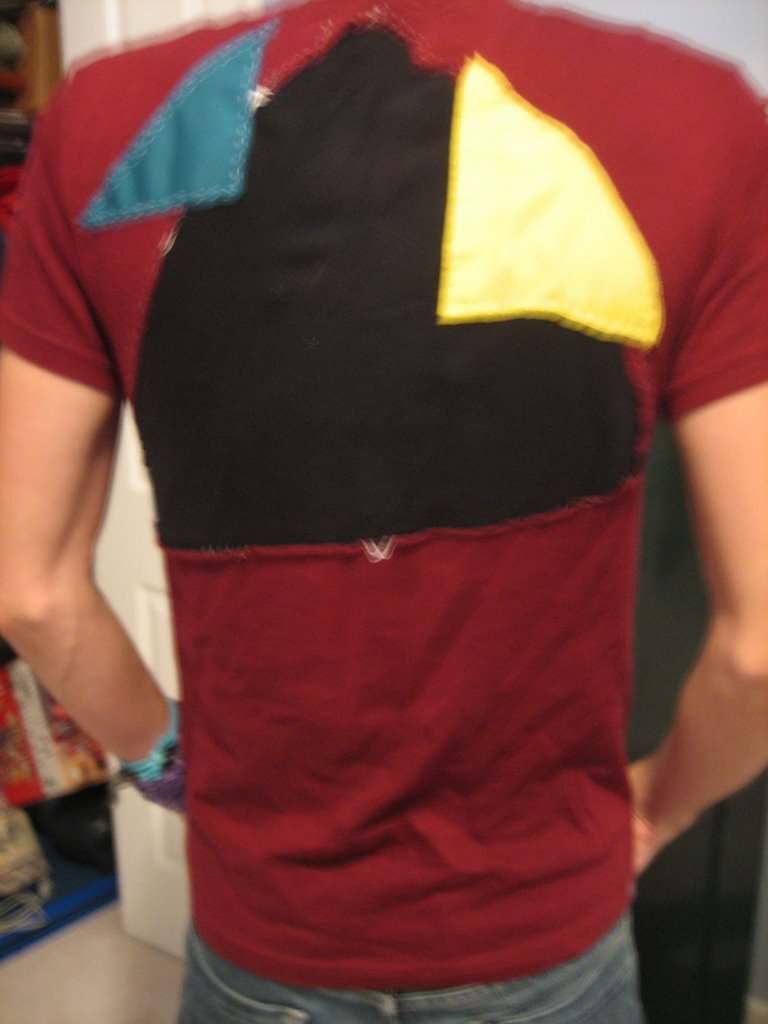
This is the second post describing my advances in crafting/embellishing clothing. The tenative name of the company is "Poetree." Perhaps this hobbie will progress into a marketable boutique shop of hand-made articles of clothing. For now, here is a sampling of the most recent creations...mostly for men:

Thursday, December 21, 2006

Original Photographs + Music + Poetry

Check out this new video on Utube. The music is by Paint the World Yellow, and the photos are mine, as is the voice reading. The poem read is an excerpt of H.D.'s "Sea Garden." Enjoy!

Sunday, December 10, 2006

Rumi's back on my radar!


RUMI

So, I find that all of my school-work these days involves writing poems, reading poems, and writing about poems. I love it. Love it. Even during finals week. My study breaks consist of reading poems that are not assigned... So, while attempting my take-home Modern Poetry exam, I set aside Frost, Stein, H.D. & Co. in favor of a little quality time with Rumi. I love his poems. I love The Essential Rumi volume that sits on my bedside table even more. The translators, Coleman Barks and John Moyne, have grouped Rumi's works into incredibly artful and inspiring "chapters," each of which begins with an "introduction" I find as ellusive and elucidating as Rumi's works themselves. Just listen to this...
CHAPTER 10--ART AS FLIRTATION WITH SURRENDER: WANTING NEW SILK HARP STRINGS...
On Flirtation:
The design on the curtains is not what they conceal. Artists love shapes for enclosure, the chained cup beside the waterfall as a way of tasting the waterfall and maybe even the presence of someone meditating in the cave behind it. Forms keep splitting their chrysali, but the old harper wants one more set of silk strings. Some sufis have seen the beauties of art as something that can slow down soul growth. Art gives a teasing taste of surrender without full experience. Beautiful poetry can keep one on the verge of the oceanic annihilation in God. Rumi says, we've been walking in the surf holding our robes up, when we should be diving naked under, and deeper under.

All of this introduces a section of poems that I find especially tantilizing. Here is one of my favorite excerpts from the poem, "Chinese Art and Greek Art":

In your light I learn how to love.
In your beauty, how to make poems.

You dance inside my chest,
where no one sees you,

but sometimes I do,
and that sight becomes this art.

~~~~~~~
Drumsound rises on the air,
its throb, my heart.

A voice inside the beat says,
"I know you're tired,
but come. This is the way."

Are you jealous of the ocean's generosity?
Why would you refuse to give
this joy to anyone?

Fish don't hold the sacred liquid in cups!
They swim the huge fluid freedom.

.....................
(The questions being asked here are enough for me... They are enough. Is art the illusion? Or is art the freedom? Ah, Rumi... )

Friday, December 08, 2006

Lovesick: A Sequence of Lyric Poems


This is my Poetic Sequence Final Project! I have been publishing the drafts of many of these poems to this blog over the past six months or so. While the poems are not "finished" by my (impossible) standards, they are in final forms, of a sort. Enjoy!

follow this link!

Thursday, December 07, 2006

Oh, Finals Week...

I find that there are two brilliant insights I always gain during Final Exam week...
1) A device that gave you caffeine intravenously would be very well received by college kids world-wide.
2) Final Exams are not a test of knowledge or skill, but rather a sort of decathalon. In other words, its not how fast you can sprint, but whether or not you are still standing after thirty miles.

The quest for good grades generally comes down to an ability to discipline oneself, and to go without sleep, food, or normal social interactions for days or weeks on end. I have written upwards of seventy graded pages in the last two weeks, and I have yet to enter finals week itself.
I am supposed to be hammering out another ten of them tonight, about Critical Analysis of the poetry of Mary Wroth, and an explication of one of Ben Jonson's strange little poems. I had better luck making nonsensical genius out of Gertrude Stein yesterday...
My professors seem to like to give us life-lessons around this time in the semester as well. Mostly, they keep reminding those of us who are plugging away in academic buildings cracked-out on coffee all night, that only about a third of PhDs in literature receive tenure-track positions at universities in this country. For those of us who have designs on academia, this hurts. So, to give up the dream is out of the question. But, ten years from now...or more, if I have a doctorate in literature and no job, what will I have made of myself? What will it matter that Lady Mary Wroth, Ben Jonson, Gertrude Stein, and Louise Gluck every teased my brain, or made me shiver with instantaneous understanding?
I want to teach. I want the energy and creativity derived from such a place as this. So on the cusp of finals week, I am sending a cheers out to those of you who are students cramming your brains and denying your bodies...and those of you who teach us, and are buried under mountains of ungraded papers, unwritten recommendations, and an administration breathing down your neck. To you, we say: thanks for the knowledge. It does not go unheaded.

Hopefully that has warmed up my brain a little. Back to the old grind...

Wednesday, November 29, 2006

Ramblings...


It's been a week or so since the last time I put down any thoughts here. Actually, I spent all of Thanksgiving Break writing a massive research paper for my Poetic Sequence Directed Study, entitled: "Louise Gluck's Meadowlands: The Palimsestic Mimesis of the Human Impulse to Create." Sounds riveting, no? It is supposed to make it to cyberworld on our class blog, so don't worry your little heads...

So, I find that in enersing myself in literary criticism and theory, I am unable to write my poems. Or if I do allow myself even one tiny moment of revision of my creative work, hours are snapped up in no time, and I have forgotten to eat, sleep, swallow, or do any of my other homework. So I banned myself from my own poems for the duration of Thanksgiving Break and hammered out twenty pages of genre theory instead. Sweet. Hence I haven't been blogging. I have been thinking about my blog, however, and how it will soon undergo yet another metamorphesis of purpose. I am spending 5 months in the lovely city of London, beginning in January. So, this space will hopefully expand accordingly into an ongoing multimedia travelogue, without losing its creative, poetic edge...

What I really wanted to talk about was a post I created back in the late summer on this blog announcing the departure of my mentor for another university. I have been elated to find out that he is returning, for love of the institution, and I couldn't be happier. The relationship of a mentor and a truly connected student is not a thing to be held lightly. The last year and a half of my undergraduate academic career looks like the most promising yet. Stay tunned...

Tuesday, November 21, 2006

Another long, difficult draft...

“Bird Tracks”

I.
Zen masters are to be
like the tracks of birds in the sky,
untraceable, always their own—
not self-consciously proclaiming
or not-proclaiming,
either.

We learned.
That was our beginning.
Five-hundred miles from me, you talked,
drinking only one cocktail before calling,
to calm your nerves, but keep your wit.
You read Buddhist philosophy aloud.
Eventually, leaving the drinks,
and claiming a dimension
you saw in me, in us.
I could not see.

We didn’t know each other, yet.
I preached the Middle Way. Then, let you
distinguish between your insights:
it is all meaningless,
or meaningful. No. I said.
It is.

Then,
we would change opinions, our minds
shifting like air.


II.
(I told you once, the child I was wanted to be
a feather-footed Indian, hunting.
But my walk is heavy-heeled.
No number of feathered willows caught around my hair
or war-paint
made me silent.)


It is
all I know to tell: what I understand
to be universal, and my suffering.
Self-conscious remembrances
dropping like breadcrumbs—
once each footfall,
each heartbeat.

And you follow, bird.
Slipping down from your tracelessness
to swallow what I’ve left there, not knowing
that there sometimes is
poison in the tales.

III.
I trail him
in my lost sleep, and imagine
that his breath still comes evenly at night,
begrudging him that peace.
You follow and cradle me.
I know you hope
that your hold might
chase him out.


You don’t know
how many times you have driven me down the street
where he still lives
in a brick house.

I don’t tell you all things.
But, surely you notice. I fall silent,
fingers clinching palms, eyes
hopelessly tracking the alley
where he collapsed me. Though, it was him who left
with bruises, bloody teeth marks on that day.
I could not hold my rage at his words,
ripping my hair and screaming, while the world
swirled closed around me.
Then, I ran nowhere
along root-broken sidewalk.


Surely you hear the crack of pain?
And can still see my colors fly down the sidewalk,
as I can? And see,
see the wreckage running a river
out my soles?

On the day he left, I was wearing
the lavender scarf I let you borrow, yesterday.
It is the one my grandmother gave me
the Christmas before I knew him—
a shield against the cold
I would feel anyway.


When that night fell
I found him, drunk and angry.
There was a bandage over his arm.
And he would not talk or look at me
as I sat down, begging to stay
in our bed. He lay down, clothed. Recoiling, even in sleep,
from my touch. Nauseated,
I lay in hell. Except that I was not dead,
and could not rest.

IV.
The days have spent themselves, with some effort,
for a year. The birds went, and came again,
re-teaching me to eat and sleep,
read, write, and sing.


To come upon you, feathered,
and eager to forge a path unfollowable.
I find myself as yet, unable.
You ask me daily to release my legs, the ground beneath,
the street, the alley, for wings
and the tracks of birds.


We could each make our own way, you say,
stopping only to rest together, to hunt and gather,
without possession.
Then, set soaring again,
one by one,
untraceable.

Saturday, November 18, 2006

The reason Textiles starts with Text...


I have undertaken a new hobby in the last three months or so...crafting and embellishing all of my clothes with a few simple tools, needle and thread, fabric paint, and markers. Go to a thrift store, buy something second hand and create the text you want to wear... It's inspiring. And fun! I am going to start posting some of my TEXTiles to my blog. It's art, that I wear.

Saturday, November 11, 2006

"Pigeon Spikes"


“Pigeon Spikes”


I.
He talked endlessly of the birds
of San Marco’s square.
But, you’ve never been there.


The birds, from a height, look like
living carpet, like so many grey hands,
fingers spreading and closing,
grasping and holding.
And from that height,
the spikes fang up in the foreground,
over gold mosaics of Byzantium,
of men brown-bearded as you or him.


I hate the stench of that place in summer,
putrid water found charming,
too many blown glass sculptures,
too much refracted light, colors.


I hated that his woman before me
was Italian, brown-skinned, dark-eyed.
And her name ended in the warm, soft whisper
of -ggio, -ggio, -ggio like wine thick on the tongue,
and a sigh of pleasure.


I hated that he could not love me
except that I had been there. I could tell of the stretch
of cathedrals through a grey, late spring sky.
That’s how we met—
I parted my lips to talk of St. Peter’s
to a room of half-sleeping American children.
He pursued me, that day. The next. The next.
After that, he walked me down the steps, every day,
faking a need to go where I had to go.


I hate that the woman with him now
has hair long, dark brown.
She’s in Firenze,
he calls her bella,
the thing he once called me,
beauty.

II.
I wrote letters—
one a day, postmarked to Italy,
that summer.

My Dove,
My Happiness,
My Wings,
My Sun,
My Everything,

Do not go missing…
I’m afraid that you are dead…
Or, have you fallen away?
I am no grotto, no duomo,
nor scaffolding to keep the pigeons at bay.

I have seen these things.
Still, I do not own them.
I cannot find a way to wrestle Venetian stars,
I am not so glittering as they are,
nor so near, in your eyes.
I cannot empty my head of heard voices,
sweet and cajoling, over your shoulder,
across this ocean.
I cannot kill the birds
landing on your arms. I am no spike
swiveled up, hanging bloody bodies
that would crumble our hallowed dwelling—


So, be prudent.
Be prudent.
Damn it; do not drown our love out.
You are just foolish enough
to cover what’s sacred
with the shit of birds.

III.
I lay face down in your bed.
I sleep this way, turned under,
though it bends my neck, crooks my spine.
I dreamt of him again,
last night, of birds.
I cannot speak or look at you,
through my pallor.
The spikes are wrenching up
my chest, or heart, an ache
that never quite quits,
coming in waves.
You want to take it from me,
but I won’t let you see the source.


You’ve never been there.
It is an ocean away.

"Music"


“Music”

I.

I am angry
that a year has not taken the pain
away.
He’s still here,
a spot on my happiness—
our happiness—
like someone writing words
over music
after the composer has died.

II.

You are playing—
my head in a pillow,
eyes on a book, or
the space just over it,
the cat a warm vibration,
soft against my exposed foot.
It is too cold to sit outside,
and now too dark.
The sun sets over a few leaves
clung on trees, and wires,
dead from breaking
off too many tender things.


You don’t sing
when you play your guitar.
Not while I’m in the room.
You hum the melody, maybe.
Concentrate the world away
while your slender fingers
count their way up the frets
and down, and up,
and down, making
that delicious sound-between-sounds
of a finger drawn along
a nickel and steel string.

III.
I am angry
that he is here.
Though, you mostly don’t hear him.
He spits through words clanging across
the page,
an interruption, ghostly,
of the harmonies we make
when I am forgetting him,
and listening.


I am rarely forgetting him.
I am rarely listening.
Though you go on playing.
And I am here, hearing.
One day. One day soon,
I will forget to speak,
the way you do when your fingers
alight and rise, in turn, eyes shining,
making something
of the very air around you.

I want to forget to speak.
And I will not need the words you do not say,
which cause you so much pain.
No more pretty lies, no more ghost.
Music isn’t written that way.

Tuesday, November 07, 2006

Birds in D.C.


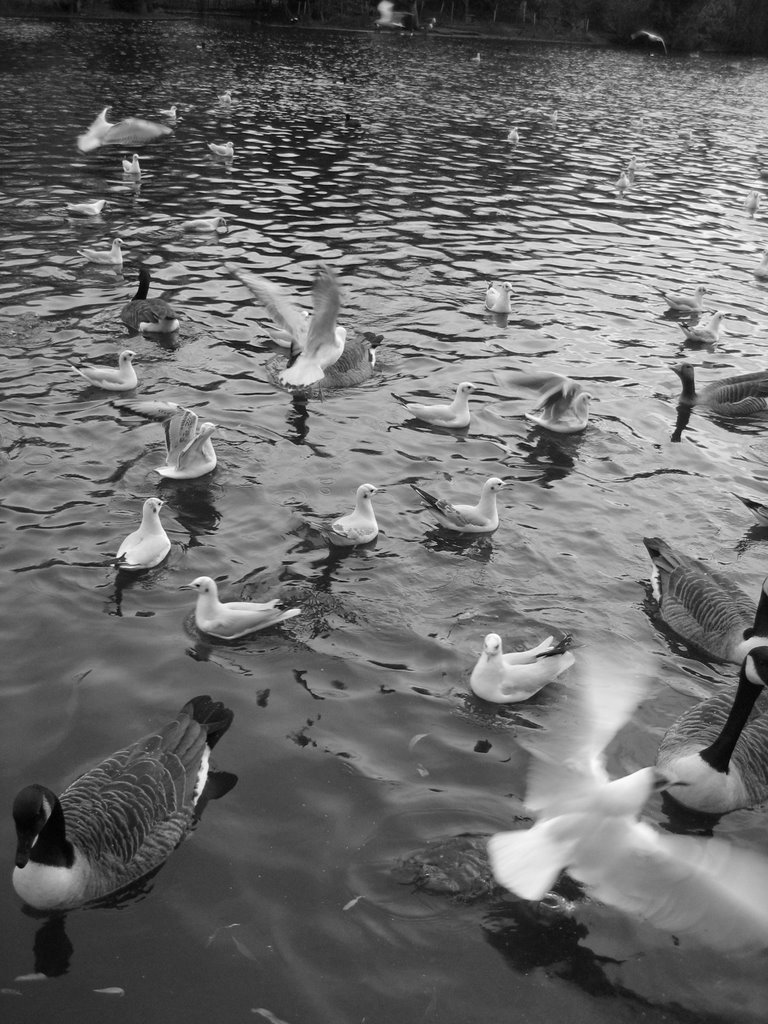
This has got to be one of the coolest photos i have ever taken. These birds were having a bath in the fountain beside the Smithsonian of African Art on Sunday. I am still working on identifying them more specifically.

Friday, November 03, 2006

The poetry if Ellen Bryant Voigt.


I attended a reading of Ms. Voigt's in Richmond yesterday, to celebrate her upcoming book, a culmination of a lifetime of poetic achievement: Messenger: New and Selected Poems 1976-2006 .


I cannot say enough about the melodic quality of this woman's incredible voice. As she was reading, the poetry lilted into a new life on her "southside Va-gin-ya" tongue. She recited, more than she read, looking deeply at a packed room of students, professors, community members, and others. Her eyes are a pale blue, and her shock of white hair is like the crown of an egret. She is an impactful pressence, but she exudes warmth, kindness, and laughter.

She spoke briefly, to preface the "new cache" of poems in Messenger about the nature of poetic sequence. I am trying to write a poetic sequence now. And, I am beginning to see sequence everywhere. Voigt spoke to an increasing turn toward the sequence among contemporary poets, away from the shapely volume, or perhaps, as a sort of mutation or progeny of the latter. She claimed her own fascination with the form of poetic sequence, with what happens when you "lay lyrics next to each other" and they begin to speak, one to another, to the reader, to the writer, to the literary tradition. Sometime in December, I will have an entire sequence of poems to lay end-to-end on this blog. Many of them exist in draft-form here already.

The reading also provided an interesting snapshot of a local literary community. Among the audience-members were professors from several universities in Virginia, including Mary Washington's own Claudia Emerson, winner of the most recent Pulitzer Prize for Poetry. And, the young woman who happened on an unpublished, heretofore unknown, Sylvia Plath poem, was also in attendance. The politics of literature, like the politics of any profession can be daunting to an up-and-coming, such as I hope to be. Social strata are interesting animals, and word-of-mouth is a powerful tool. I always wonder, where genius and interpersonal struggle meet? How do they combat each other? What escapes into the cracks as a result?

I digress.

In short, read Voigt. You will be richly rewarded.

Also, here is a recording of her reading of "The Feeder," a prize-winning poem published both in her new book, and in "Blackbird," the literary journal sponsoring last nights event. Happy listening: http://www.blackbird.vcu.edu/v3n2/poetry/voigt_eb/index.htm