Sunday, February 11, 2007

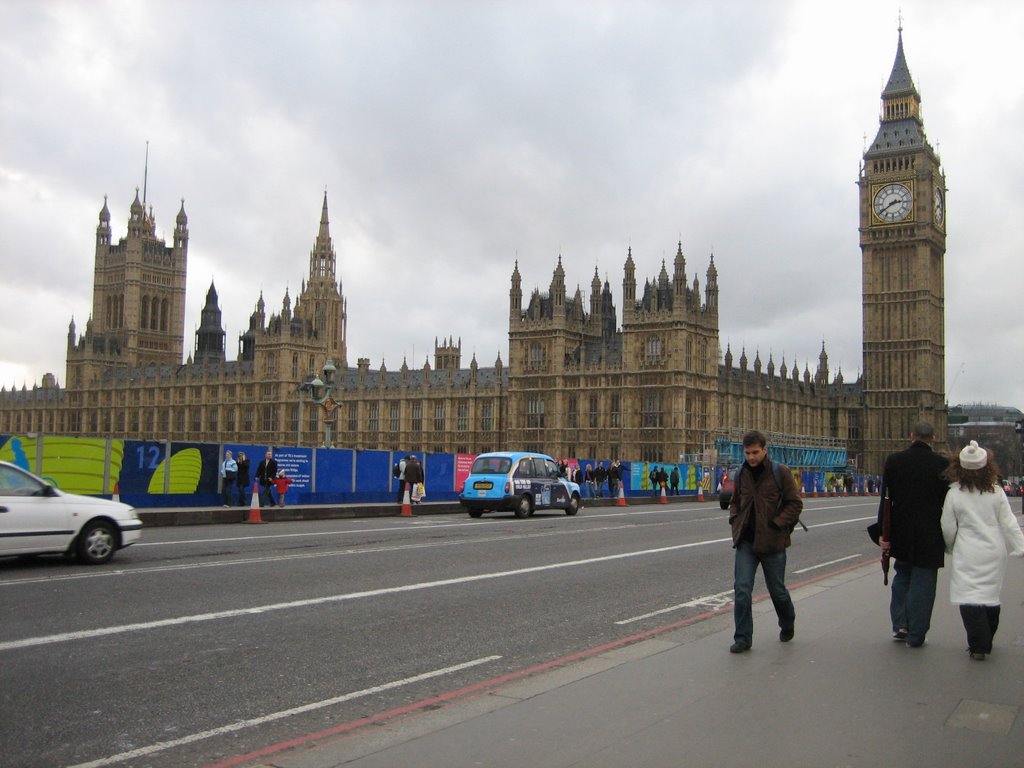
Tate Britain speaks volumes silently...


The Photographers' Gallery


A CHARMING SMALL gallery near Leceister Square in London...The Photographers' Gallery is split into two street-side buildings, including a small crammed bookshop. The gallery was closed on Wednesday, when we first went to see it, but reopened on Friday, and we walked through Trafalgar Square towards Chinatown a second time to discover it. It is free and intimate, with an auction space upstairs. It is also apparantly one of the only galleries devoted solely to photography in London. Definitely worth the visit. We saw the breathtaking black-and-whites of Anders Petersen, the curious "found art" and exploration of cultural bounderies which marks the work of Fiona Tan, and the work of Simon Roberts and Philippe Chancel, who explore the reclusive and exotic cultures of Russian Siberia and North Korea, respectively...

Also, this is one of the only galleries in all of London in which I have been able to photograph the art. I often sneak photographs, though. The act of taking photos in art galleries is so pervasively frowned upon here that there aren't even signs that forbid your taking pictures...the condition is understood. Therefore, I am consistently having the experience of being politely but forcefully told to put my camera away. Which bothers me, because without a camera and a pen and paper I cant properly record the images that are moving to me, in order to find out more about the artist later. The question constantly in my mind, when I am feeling a bit indignant after being reprimanded yet again, is why? Do they insist that photos cannot be taken because the art is property and I am somehow stealing it...like the belief in some more sequestered culture-groups that taking a photo of someone could steal their soul? Or is it a moral stance? Am I defacing the art in some way? After all, what does it mean to take a photograph of a photograph? How far removed from the subject am I, how limited is my view, my understanding, by the perameters of my camera lens? They probably wonder why I am taking pictures in the first place...nostalgia, proof, touristy representations of times spent...or as a reference point for my own work, for the pot of creative stimulation i am constantly churning in my brain.... I prefer to think that is the later, but cannot be sure. This is a persistently unresolved question for me...

Thursday, February 08, 2007

Sunday, February 04, 2007

The Children of War.


THE PLIGHT OF THE BRITISH PEOPLE during World War II is incredibly stirring, and difficult to fathom, particularly for Americans (for obvious geographical reasons). As I am getting to know the city intimately, I thought the time ripe for an exploration into the destruction of London by the Blitz bombings of World War II. A German bomber plane actually crash landed a mere block from my flat in 1941. It was believed that the plane was intended to bomb Buckingham Palace, but was clipped by a British defense pilot, and sent hurtling into a train station courtyard at some 350 miles per hour.

To know more, I commuted to the Imperial War Museum today. It is a bit off the beaten path of most tourists, and borders a working class neighborhood, complete with a make-shift soccer field nestled in the side gardens. The museum was a profoundly moving experience for me. Firstly, the majority of conversations around me indicated that not only was I surrounded almost exclusively by Britons (an odd museum experience in multicultural London, to say the least) but the people around me were swapping stories of their family's station during World War II. This woman's father was among the children evacuated from London, and sent to live in foster care in the country for four years...That young man's grandfather was killed on D-day and his letters are among his mother's possessions...My street in London was destroyed...Mine too...My grandparents lost everything they owned...My grandmother was a nurse, though only fourteen when the war broke out...My grandfather was a German POW for two years.
Strangely, while drifting from display case to display case, in and out of model bomb shelters, reels of film running in dark rooms and niches, I began to feel an incredible affinity for the people exchanging stories in my presence. My grandfather also served in the war, losing his left arm at the age of 21. The patriotic sentiment, the mixture of laughably silly propoganda posters and horrific black-and-white images, seemed familiar, not in a benign way, but in a unifying one. Truly, a world war.

Perhaps the strength of my response was due to the fact that I came to the museum alone, as a mission that was personal. Or, perhaps it was the particular exhibits I saw...focusing on the plight of British children during WWII, and the atrocities of the Holocaust. (My interest being in the human side of war, the innocence shattered, lost, the civilians, the casualties who did not opt into war...who were swept up by the carnage of an impasse between particular men. Though there is attention paid in the Museum also to the technical aspects of war, the ingenuity forced by desperation.) But I left the museum energized as well as drained, hopeful as well as sobered...and very, very grateful for such a powerfully moving experience.

Wednesday, January 24, 2007

A gripping installation piece at the British Museum...


IT IS LATE AT NIGHT HERE, and I have an early class meeting in the morning, but I feel compelled to write a small blurb about the exhibition I saw at the British Museum yesterday, before its impression fades from me.
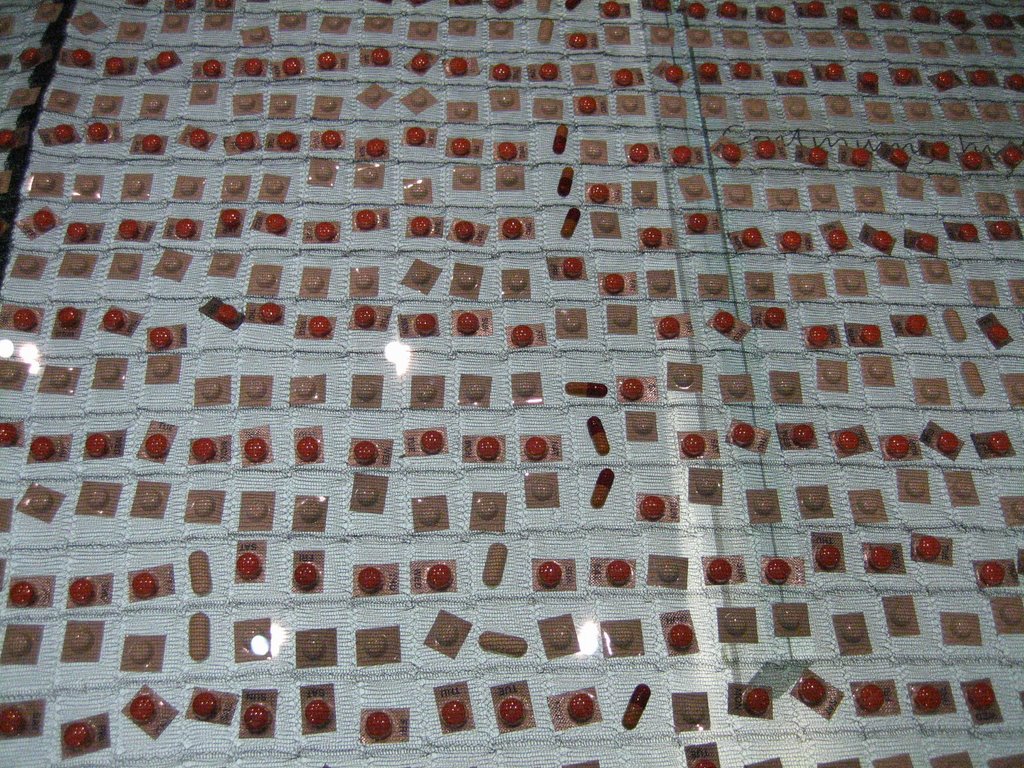
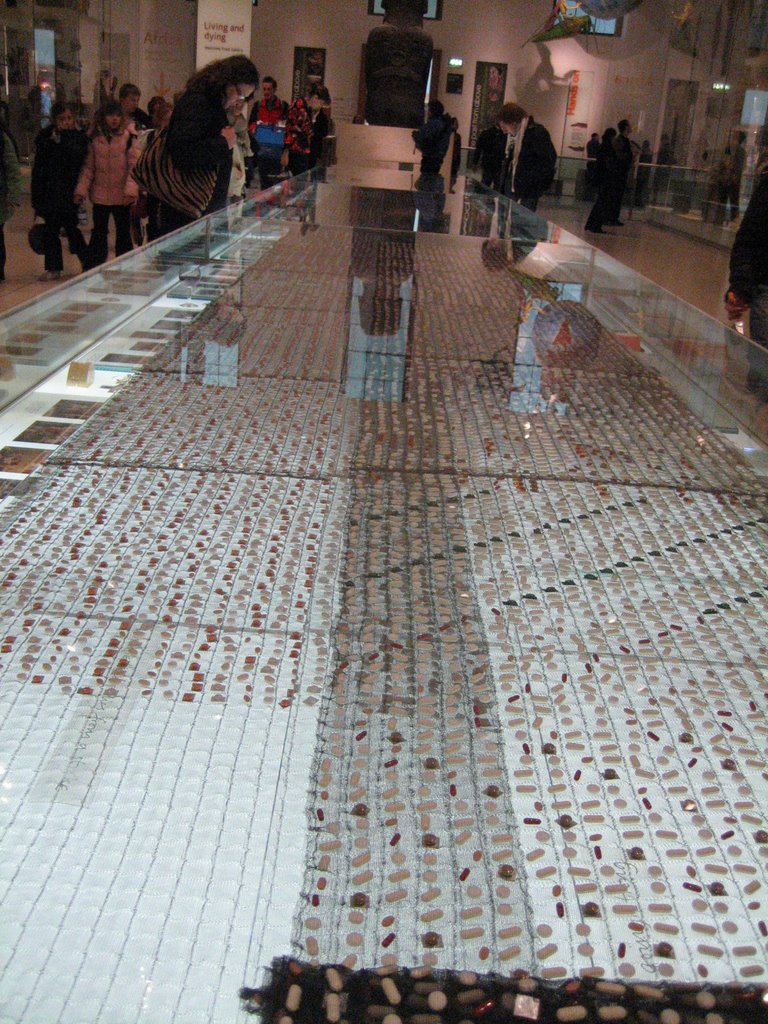
"Cradle to Grave" is the latest creation of the tripart that title themselves Pharmacopoeia. The work enters a modern artistic discourse, that of political commentary on the medical realities of our "modern" lives. This one focuses on the well-being of Brits, in particular...showing in netting some 14, 000 pills: the average consumed by a contemporary British citizen during their lifetime. The meticulous textile, drugs, other medical equipment, photographs of a very personalized treck toward death, and official birth and death certificates, combine in a startling, powerful, moving piece. Thought-provoking and imaginative...
Exactly what art should be.

never been happier to see skies of blue...

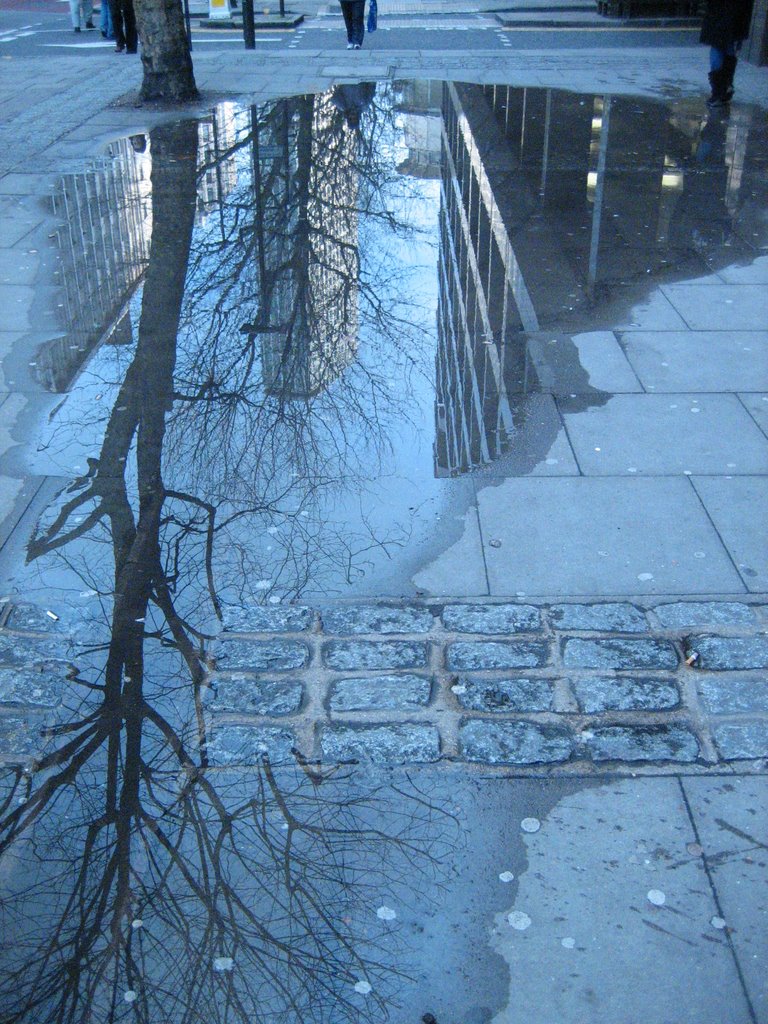
glorious sunshine reflected in a puddle on Tottenham Court Road in London! This is so rare!

Monday, January 22, 2007

Don't they know that Plato hated poets?

I AM NOT accustomed to ranting on my blog. In fact, this may be entirely unprecedented. That being said, haven't the English heard--Plato (the bugger on the left picking an imaginary nose in this image) HATED POETS! He thought they spun beautiful lies...they were dangerous. In fact, all writing was dangerous. It risked that the undereducated silver or bronze classes of "commoners" might acquire the ability to read (unlikely in itself) and misinterpreting texts! Clearly, only philosophers should pass along knowledge...you know, through pedophilic masculine homosexual relations. No one else is fit to. Speech is masculine and virtuous. Written word is feminine, given to erroneousness or subjectivity...according to Plato. How icky. I think he just couldn't deal with the female body's ability to procreate physically...he was intimidated, afraid of the feminine!

This accounted for, what in the hell am I doing reading Plato in all of my ENGLISH LITERATURE classes? What about Descartes? Have the English forgotten that he is French? Duh...that's why we say "De-cart" instead of "Des-cart-es"...

For the life of the queen, they invented the Bard, not to mention the Beatles, or Lord Byron, Dickens, Bronte, Blake, Austen, Tolkien...and the list goes on for days.

That said, what is gained by a philosophical (albeit one restricted to WESTERN philosophy) approach to literature? Perhaps it is to remind ourselves that what we are looking for in the act of literary creation is not a pleasing aesthetic experience, in and of itself...but a stab at the virtuous, the truthful, the meaningful. To create meaning out of even the most mundane...it is what poets do, but also what lovers do. This madness, feverishness, anarchic creativity is only as such in a communicable order. Language is order. Reason, philosophy...they yield and create the stuff of mythology and poetry. This is not to say that great philosophical texts are to be used by students of literature as fodder for better writing, but rather that they can be engaged. They must be engaged.

This particular philosophy of teaching can be perceived as a liberal arts education (of which i am both a huge fan and a product) to the nth power. Knowledge is not compartmentalized in reality, the way it often is in school systems, for the sake of practicality or economics... Rather, Plato and his comrades had it right--to be a scholar, one must be inquisitive about everything. Be a poet, and also a mathematician, and also a theoretician, a chemist, a musician, a politician, a playwright...and you will be a scholar in the fullest sense.


...Plato was wrong about poets though.
Friday, January 19, 2007

Has anyone seen my ability to communicate?


CULTURE SHOCK-- a phrase tossed around repeatedly among the "study abroad" gurus of universities the world wide. I didn't believe in it. Perhaps, because its manifestations are not so obvious in this era. They are subtle and pervasive collapses in communicative abilities...taken in the broadest possible sense of the phrase. It is not as if one moves to a foreign country and always feels a sense of direct homesickness, of rushing highs and lows--complete awe and enthusiasm running into disillusionment, fear, and general irritability or defeatedness, and back again. Culture shock is described in these terms, and yet it is not "culture shock" at all...

I have been thinking about this issue for the last couple of weeks, since moving to London. For me, the manifestation of the misnomer "culture shock" has been in a frustrated inability to produce creatively. Or, so I thought.

In searching for a) the roots of my creative stagnation, and b) the remedy, i have embarked on a long train of thoughts of the metaphor of language. Granted, Londoners speak English. Americans speak English. So, language is no boundary? In a simple sense--no. I comprehend most words, most utterences. But the subtleties are unnerving. In overhearing a conversation...the patterns and intonations of the speech are undecodable to me. In making a public statement, I incorrectly used the word "pants" (british for underwear) where i should have used "trousers," and quickly became the laughing stock of a queue of Britons. It is in the element of what Saussure called "Parole" that is different. Quickly, "parole" is the element of language which is the individual utterances and applications of what Saussure deemed "Langue"...or the underlying structural rules, and social contract that activates and anchors a language.

Parole, however, is the creative element of language. And I have lost my mastery of it, over night. In a broader sense, the metaphor of language is a means of understanding and explaining other systems of human communication...social customs, body language, fashion, cuisine, visual art, and music. My cues in all of these areas have failed me. So, there you have it. "Culture shock" is actually a frustrated inability to communicate and to understand. It is as if I am suddenly a toddler who knows individual words are associated with certain objects, and yet I cannot form utterances...i cannot make myself understood. Nor can I interpret my surroundings, which is perhaps more frustrating.


Take the cue of fashion. For me, fashion is crucial to my interpretation of the persons with which I am surrounded. By fashion, I do not mean the runways of Paris...rather, the choices people make or dont make about the clothing that they wear, the length of their hair, the presence or absence of makeup, etc... Most especially, the ecosystem of the college campus lends itself to the interpretation and utilization of fashion as a means of communication. Clothing choices can be misleading, but they also often are made specifically to signify that the individual enjoys a certain kind of music, or has a certain occupation, or religious belief... I am much less able to comprehend the fashion cues of Londoners. My frame of reference is gone. Indeed, it seems as if everyone is utilizing a different frame of reference. The city is so large, that in many sublingual ways, the population communicates entirely differently...

This is an extremely underdeveloped train of thought, but I will post more on it later.

Thursday, January 11, 2007

Londonese writer's block...

What is that lust for life that a writer needs...? Is it something more prevalent in young people? I have been completely inundated with architectural beauty, foreign language, currency, surroundings, living space, and so much art, culture, food, fellowship...
And my writing? It has come to a screeching halt. I think it is the lack of schedule, the lack of homeostasis. How strange! Something so organic as the creative processes (my art, crafting, etc has stopped too...even photography has slowed!) needs structure to thrive! It needs a place...

Ay, London! I am ready for school to start!

Wednesday, January 10, 2007

Here is the Derek Jarman piece on AIDS...


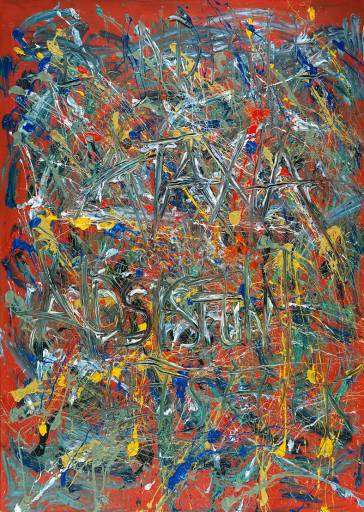
Here is the Derek Jarman piece on AIDS, "Ataxia: AIDS is fun" at the Tate.

Tate Modern is amazing!!!!


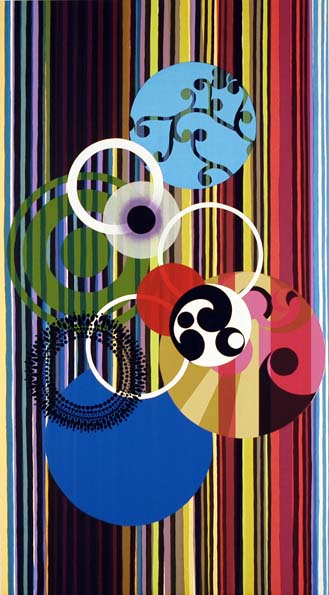
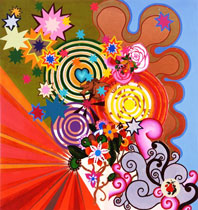
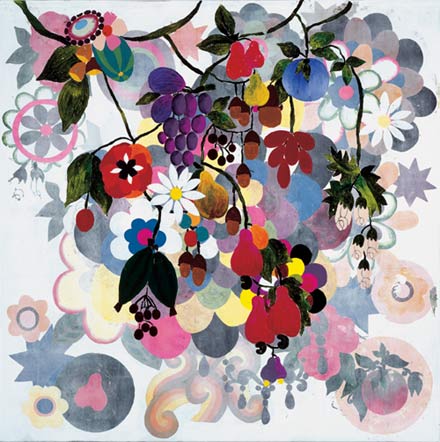
I went to the Tate Modern yesterday. All of the art is so incredible and overwhelming, plus it had a gorgeous view of the Thames. So, I really resonnated with a few pieces. There was one by an artist, whose name I forget, who died of AIDS in 1994. He created the piece after AIDS had attacked his nervous system and blinded him. It is a very thick multi-colored oil, in which he used his fingers to scrawl the words: "AIDS is fun" which is the title of the work. He was trying to counteract homophobia etc. attached to the disease. It was so powerful. I will find the artist's name and post it...
Also, I loved the work of Beatriz Milhazes. Here are some of her pieces.

Sunday, January 07, 2007

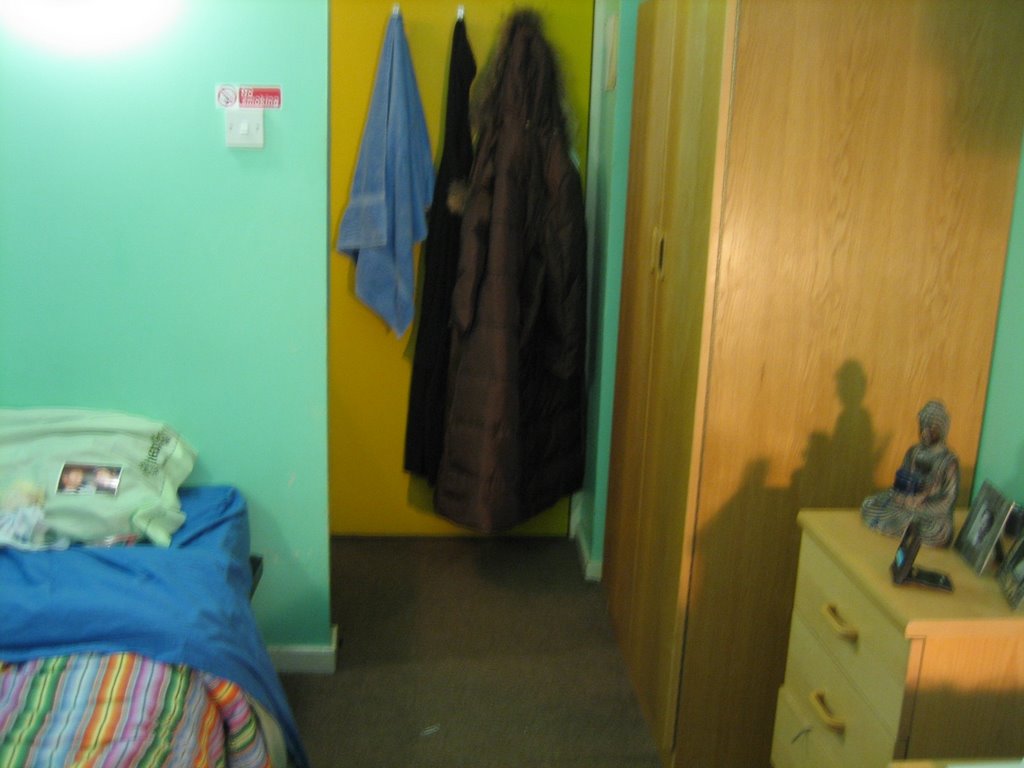
My humble abode in London, UK...


These are the images of my new room in London. I couldn't attach them to an email for some reason, so they are here instead. I will take them down again in a few days!

Friday, January 05, 2007

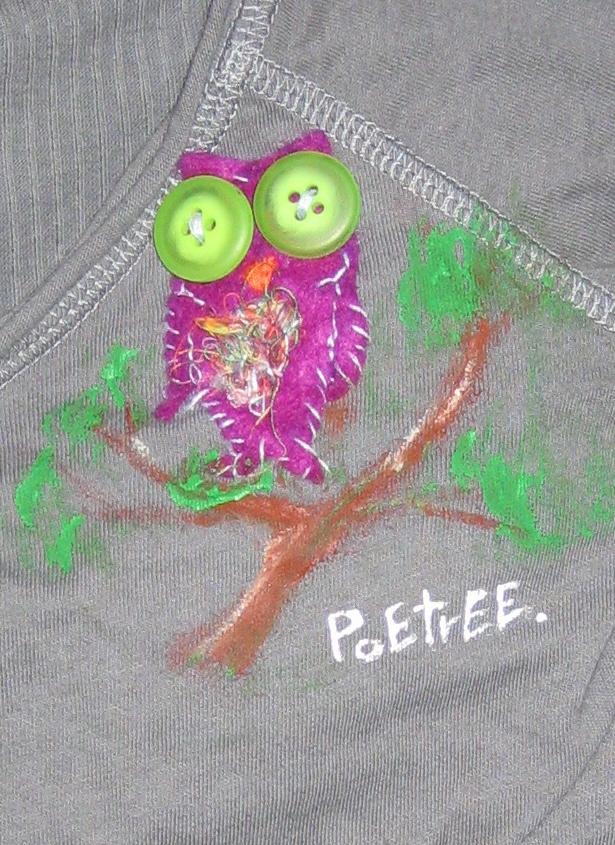
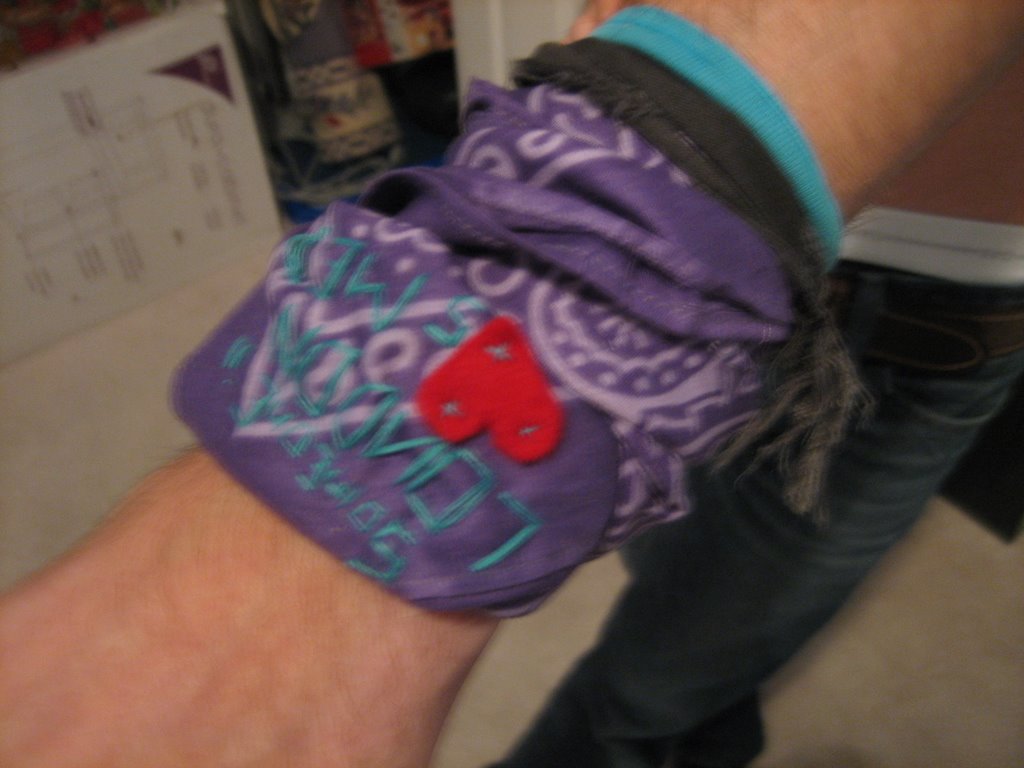
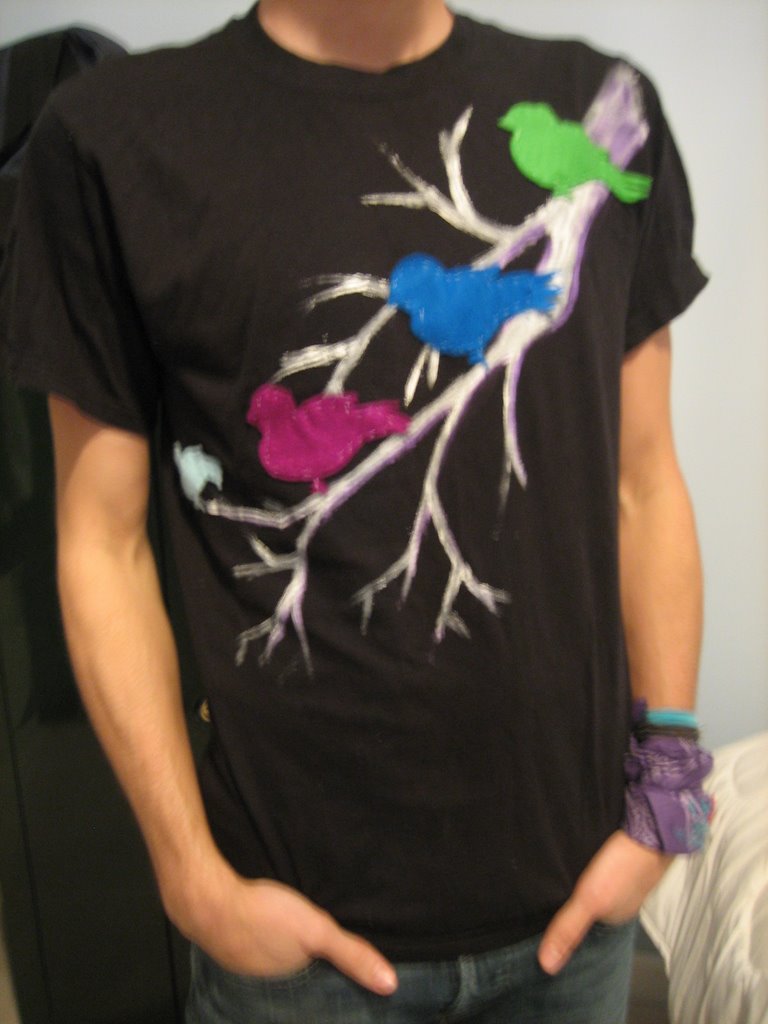
TEXTiles continued...


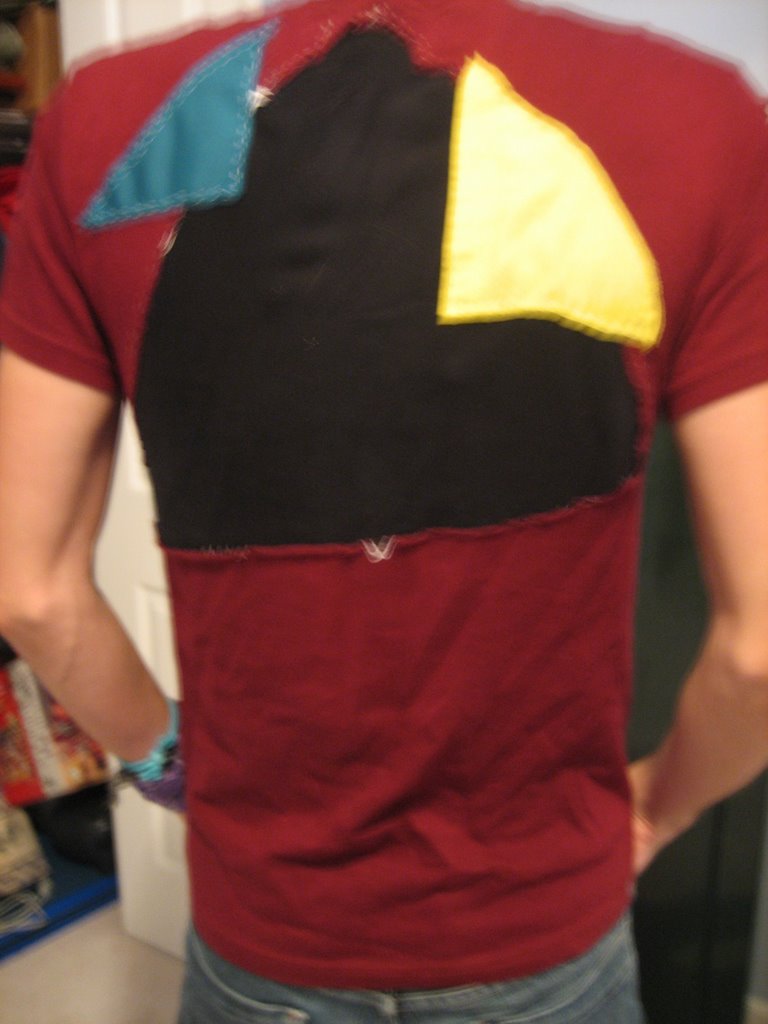
This is the second post describing my advances in crafting/embellishing clothing. The tenative name of the company is "Poetree." Perhaps this hobbie will progress into a marketable boutique shop of hand-made articles of clothing. For now, here is a sampling of the most recent creations...mostly for men:

Thursday, December 21, 2006

Original Photographs + Music + Poetry

Check out this new video on Utube. The music is by Paint the World Yellow, and the photos are mine, as is the voice reading. The poem read is an excerpt of H.D.'s "Sea Garden." Enjoy!

Sunday, December 10, 2006

Rumi's back on my radar!


RUMI

So, I find that all of my school-work these days involves writing poems, reading poems, and writing about poems. I love it. Love it. Even during finals week. My study breaks consist of reading poems that are not assigned... So, while attempting my take-home Modern Poetry exam, I set aside Frost, Stein, H.D. & Co. in favor of a little quality time with Rumi. I love his poems. I love The Essential Rumi volume that sits on my bedside table even more. The translators, Coleman Barks and John Moyne, have grouped Rumi's works into incredibly artful and inspiring "chapters," each of which begins with an "introduction" I find as ellusive and elucidating as Rumi's works themselves. Just listen to this...
CHAPTER 10--ART AS FLIRTATION WITH SURRENDER: WANTING NEW SILK HARP STRINGS...
On Flirtation:
The design on the curtains is not what they conceal. Artists love shapes for enclosure, the chained cup beside the waterfall as a way of tasting the waterfall and maybe even the presence of someone meditating in the cave behind it. Forms keep splitting their chrysali, but the old harper wants one more set of silk strings. Some sufis have seen the beauties of art as something that can slow down soul growth. Art gives a teasing taste of surrender without full experience. Beautiful poetry can keep one on the verge of the oceanic annihilation in God. Rumi says, we've been walking in the surf holding our robes up, when we should be diving naked under, and deeper under.

All of this introduces a section of poems that I find especially tantilizing. Here is one of my favorite excerpts from the poem, "Chinese Art and Greek Art":

In your light I learn how to love.
In your beauty, how to make poems.

You dance inside my chest,
where no one sees you,

but sometimes I do,
and that sight becomes this art.

~~~~~~~
Drumsound rises on the air,
its throb, my heart.

A voice inside the beat says,
"I know you're tired,
but come. This is the way."

Are you jealous of the ocean's generosity?
Why would you refuse to give
this joy to anyone?

Fish don't hold the sacred liquid in cups!
They swim the huge fluid freedom.

.....................
(The questions being asked here are enough for me... They are enough. Is art the illusion? Or is art the freedom? Ah, Rumi... )

Friday, December 08, 2006

Lovesick: A Sequence of Lyric Poems


This is my Poetic Sequence Final Project! I have been publishing the drafts of many of these poems to this blog over the past six months or so. While the poems are not "finished" by my (impossible) standards, they are in final forms, of a sort. Enjoy!

follow this link!

Thursday, December 07, 2006

Oh, Finals Week...

I find that there are two brilliant insights I always gain during Final Exam week...
1) A device that gave you caffeine intravenously would be very well received by college kids world-wide.
2) Final Exams are not a test of knowledge or skill, but rather a sort of decathalon. In other words, its not how fast you can sprint, but whether or not you are still standing after thirty miles.

The quest for good grades generally comes down to an ability to discipline oneself, and to go without sleep, food, or normal social interactions for days or weeks on end. I have written upwards of seventy graded pages in the last two weeks, and I have yet to enter finals week itself.
I am supposed to be hammering out another ten of them tonight, about Critical Analysis of the poetry of Mary Wroth, and an explication of one of Ben Jonson's strange little poems. I had better luck making nonsensical genius out of Gertrude Stein yesterday...
My professors seem to like to give us life-lessons around this time in the semester as well. Mostly, they keep reminding those of us who are plugging away in academic buildings cracked-out on coffee all night, that only about a third of PhDs in literature receive tenure-track positions at universities in this country. For those of us who have designs on academia, this hurts. So, to give up the dream is out of the question. But, ten years from now...or more, if I have a doctorate in literature and no job, what will I have made of myself? What will it matter that Lady Mary Wroth, Ben Jonson, Gertrude Stein, and Louise Gluck every teased my brain, or made me shiver with instantaneous understanding?
I want to teach. I want the energy and creativity derived from such a place as this. So on the cusp of finals week, I am sending a cheers out to those of you who are students cramming your brains and denying your bodies...and those of you who teach us, and are buried under mountains of ungraded papers, unwritten recommendations, and an administration breathing down your neck. To you, we say: thanks for the knowledge. It does not go unheaded.

Hopefully that has warmed up my brain a little. Back to the old grind...